
Beyond the ‘What-Ifs’:
Therapy for Anxiety and Panic
We provide the clinical tools to deconstruct the cycles of panic and persistent worry. By harmonizing evidence-based protocols with integrative perspectives, we help you cultivate a foundation of physiological calm and mental clarity.
What is Anxiety?
Anxiety is more than occasional worry; it is a persistent state of apprehension, tension, and unease that can significantly impact your daily functioning. While stress is a temporary response to pressure, anxiety disorders involve excessive fear that persists for weeks or months, often feeling difficult or impossible to control. Research shows that approximately 1 in 7 people in Singapore will experience an anxiety disorder in their lifetime, and evidence-based psychological interventions can help you regain control.
Common Anxiety Disorders
Generalized Anxiety Disorder (GAD): Chronic, excessive worry about multiple life areas, often accompanied by physical tension.
Panic Disorder: Sudden surges of intense fear (panic attacks) with heart palpitations.
Social Anxiety: Intense fear of judgment or embarrassment in social or performance situations.
Health Anxiety: Excessive worry about serious illness and frequent reassurance-seeking.
Specific Phobias: Irrational, intense fear of specific objects or situations.
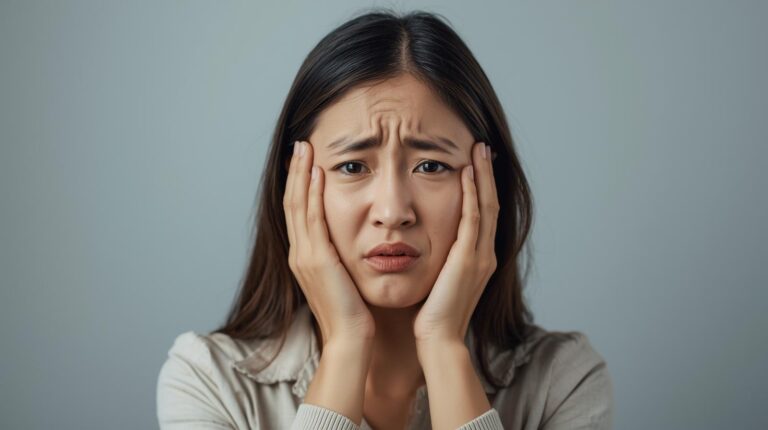
The Manifestations of Anxiety
Physical Signs
- • Racing heart or palpitations
- • Shortness of breath or chest tightness
- • Muscle tension, aches, or tremors
- • Digestive issues, nausea, or "butterflies"
- • Excessive sweating or cold, clammy hands
- • Dizziness, lightheadedness, or fatigue
- • Difficulties falling or staying asleep
Emotional Signs
- • Constant worry that is difficult to control
- • Feeling on edge, restless, or "keyed up"
- • Irritability or low frustration tolerance
- • A sense of impending doom or danger
- • Fear of losing control or "going crazy"
- • Feeling overwhelmed by minor tasks
Cognitive Signs
- • Difficulty concentrating or mind going blank
- • Racing thoughts or "mental fog"
- • Constant scanning for threats (hypervigilance)
- • Catastrophizing (expecting the worst)
- • Persistent forgetfulness and indecisiveness
- • Intrusive, repetitive anxious thoughts
Behavioural Signs
- • Avoiding people, places, or situations
- • Procrastination due to overwhelming worry
- • Social withdrawal from friends and family
- • Frequent checking or seeking reassurance
- • Difficulty leaving home or finishing tasks
- • Relying on safety rituals to manage fear
Take a Moment to Reflect
Sometimes it is difficult to distinguish between daily stress and clinical anxiety. This brief self-assessment tool is designed to help you quantify the level of tension and worry you have experienced over the past two weeks.
Identifying your score is a helpful starting point for our clinical discussion. Please answer the questions below as honestly as possible based on your current experience.
Generalized Anxiety Disorder (GAD-7) Self-Assessment
Over the last 2 weeks, how often have you been bothered by the following problems?
Scoring Your Results
For each item, score 0 (Not at all), 1 (Several days), 2 (More than half the days), or 3 (Nearly every day).
Total Score Interpretation:
• 5–9: Mild Anxiety
• 10–14: Moderate Anxiety
• 15–21: Severe Anxiety
Citation: Spitzer RL, Kroenke K, Williams JBW, Lowe B. A brief measure for assessing generalized anxiety disorder: the GAD-7. Arch Intern Med. 2006;166:1092-1097.
Disclaimer: This self-assessment tool is intended for screening purposes only and does not constitute a clinical diagnosis. A high score is not a definitive diagnosis of an anxiety disorder. A formal psychological evaluation by a registered clinical psychologist is required to determine a diagnosis and an appropriate integrative treatment plan. If you are in immediate distress, please contact emergency services or a crisis hotline.
Unsure what your score means for you?
Every individual's experience is unique. We can review these results together during an initial consultation and develop a roadmap specifically for your recovery.
DISCUSS MY RESULTSAnxiety and the Mind-Body Connection
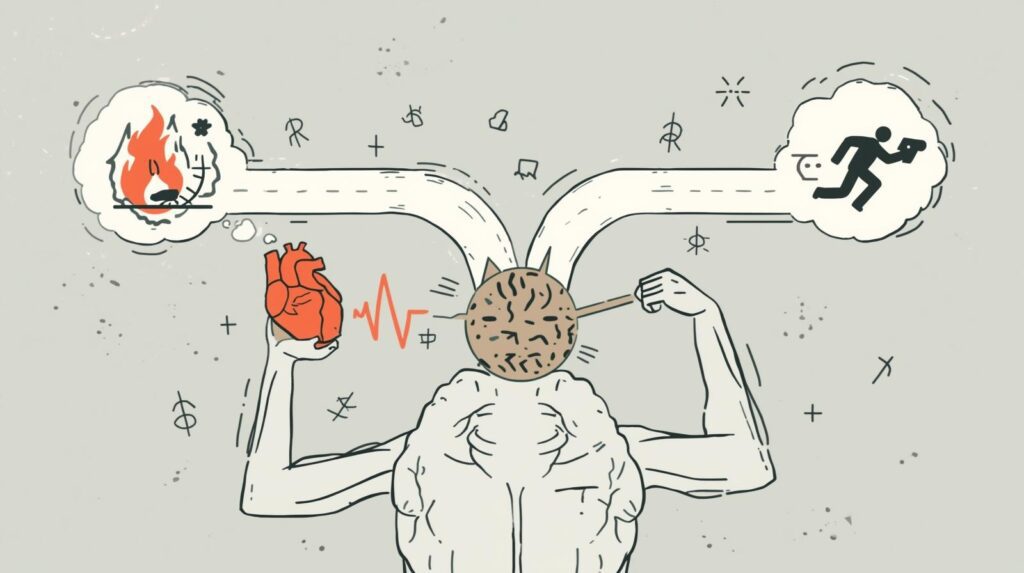
The Western Perspective
Clinical Psychology understands anxiety through the Autonomic Nervous System's "Fight or Flight" response. When the brain perceives a threat—even a purely cognitive one like a worry about the future—it triggers a surge of adrenaline and cortisol. This results in physiological arousal: a racing heart, shallow breathing, and muscle tension. When this system fails to return to a baseline state, it creates a feedback loop where physical tension reinforces anxious emotions and vice versa.
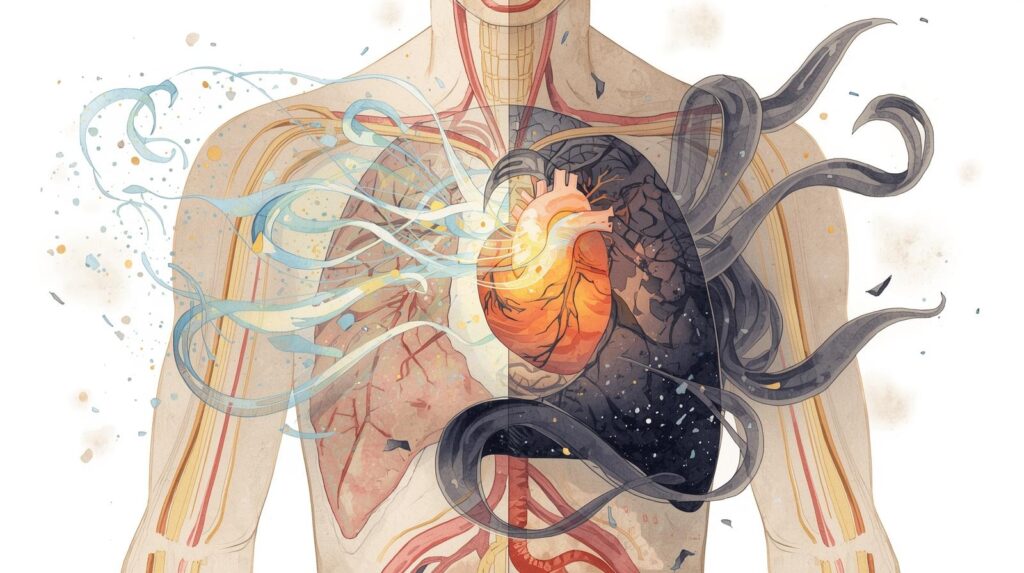
The TCM Perspective
Traditional Chinese Medicine views anxiety as a disruption of internal equilibrium, specifically affecting the Heart (housing the 'Shen' Spirit) and the Liver (regulating the flow of Qi). Stagnant Liver-Qi often manifests as irritability, chest tightness, and a sense of being "stuck." If the Heart-Shen is ungrounded or lacks nourishment, it results in the hallmark symptoms of palpitations, restlessness, and insomnia.
Evidence-Based Modalities for Anxiety
Our approach to anxiety is grounded in clinical science. We select the tools that best fit your specific presentation—whether you are struggling with physical panic, social fears, or chronic "what-if" worrying.
Identify the "thinking traps" or cognitive distortions that fuel anxiety. By systematically modifying unhelpful behaviors, you can break the cycle of worry and regain a sense of control.
Effective for preventing the "spiral" of anxious thoughts. It teaches you how to stay present and observe feelings with curious detachment rather than being overwhelmed by them.
Focuses on psychological flexibility. Learn to accept difficult thoughts as passing mental events while committing to actions that align with your deepest values.
For phobias and panic, we use gradual, controlled exposure. This helps desensitize your nervous system’s "alarm" response, teaching your body that the situation is no longer a threat.
The MIND HEALTH Difference: Unlike standard clinics that focus solely on talk therapy, we integrate hospital-grade clinical rigor with restorative TCM insights. We don't just target your thoughts; we work to regulate the underlying nervous system imbalance for a truly holistic roadmap to recovery.
Take the Next Step
Your initial consultation is the first step toward mapping your specific anxiety patterns and creating a personalized recovery plan.
BOOK INITIAL CONSULTATIONReclaiming Freedom After Panic
The following is a composite case study representing common experiences of our clients.*
The Challenge
After getting trapped in a lift, "David" found himself caught in a cycle of avoidance. He stopped taking the MRT and visiting malls, fearing that a sudden panic attack would lead to a public commotion or a heart-related emergency. This led to a state of hyper-vigilance, where he was constantly monitoring his pulse for signs of danger, ultimately restricting his ability to work and socialize.
The Intervention
Our work focused on relaxation training to help David manage his somatic symptoms and lower his baseline physical tension. We utilized cognitive reframing to address his catastrophic thoughts regarding his heart health and the fear of "losing control." Finally, we implemented a step-by-step exposure plan, allowing him to gradually re-enter crowded environments and trains while maintaining a sense of safety.
The Transformation
David successfully shifted his focus from internal body-checking to external engagement with his life. By reducing his reliance on avoidant behaviors, he regained the autonomy to commute via the MRT and enjoy public spaces without anxiety. He no longer views his physical sensations as a threat, having developed the psychological resilience to navigate daily stressors with mental clarity.
Frequently Asked Questions (FAQs)
Q: How effective is therapy for anxiety and panic?
Q: How many therapy sessions are needed for anxiety recovery?
Q: Can you fully recover from a diagnosed anxiety disorder?
Ready to Begin Your Recovery?
If you are ready to address the physical and emotional impact of anxiety with an evidence-based, integrative approach, we invite you to schedule an initial consultation.
SCHEDULE YOUR CONSULTATION