
The Future of Healing: Why the East-Meets-West Mind-Body Approach is the New Clinical Gold Standard
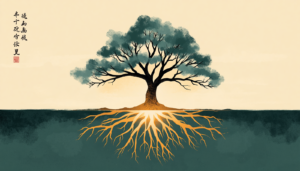
Ten weeks ago, this series started with a simple observation: your headaches, the brain fog your stiff back, your 3am wake-ups were never really separate problems. They were your body keeping score on stress no one ever taught you to actually process. Today's finale asks the bigger question: what if healthcare treated that seriously? Not three specialists who never talk to each other. One coordinated approach — and here's the part worth being honest about: TCM can beautifully clear stagnation, and medication can calm an overwhelmed nervous system, but if the boundary failure that caused both is never addressed, the pattern just comes back. That's not a knock against either discipline. It's the actual case for why the psychological work has to be the foundation, not a nice-to-have alongside it. Classical TCM even has a name for this: 标本, Root and Tip. Treat only the loud symptom, and relief is temporary. Treat the Root — the boundary that never got held — and that's where things actually resolve. If any part of this series described your own body back to you, that recognition is worth taking seriously. This is exactly the work I do — integrating clinical psychology with a...
Read More

You Treat Rest Like a Cost. TCM Treats It Like Capital.
Waiting for a total physical breakdown before you finally change your lifestyle? That isn't "resilience"—it's a massive mathematical error. For Singapore’s "Sandwich Generation," ignoring minor brain fog, frequent sighing, or back stiffness is simply borrowing energy from your future self at a sky-high interest rate. 2,000 years ago, the Huangdi Neijing (黄帝内经) warned that treating an illness after it forms is like "渴而穿井" (digging a well only when you're already parched). You are running out of time before a structural foreclosure. Read part 9 of The Sandwiched Body - where clinical psychology meets Huangdi Neijing to find out how you...
Read More
Is It Just Your Office Chair? The Mind-Body Science Behind Chronic Stiff Backs and Stagnant Stress
Groaning and feeling completely locked up every time you stand up from your desk? And no, buying a more expensive ergonomic office chair isn’t going to fix it. For Singapore’s "Sandwich Generation" managing corporate deadlines while physically and emotionally supporting two generations, a stiff lower back is a load-bearing boundary crisis. 2,000 years ago, the Huangdi Neijing (黄帝内经) diagnosed this as "肾之府" (The House of the Kidneys) freezing due to Qi stagnation. Modern medicine calls this unconscious pelvic-lumbar bracing—where stress forces you to subconsciously clench your pelvis, starving your lower back of blood flow. Read on to learn more about...
Read More
Integrative Treatment for Stress-Linked Insomnia: Combining Clinical Psychology and TCM in Singapore
Stress-linked chronic insomnia is a dual neurobiological and somatic condition characterized by nighttime hyperarousal, racing thoughts, heart palpitations, and unrefreshing […]
Read More