Author name: Dr. Jaswyn Chin

Registered Clinical Psychologist and certified EMDR therapist specializing in illness-linked mental health issues such as anxiety, depression, insomnia and pain management. Also a pioneer in the integration of the practice of clinical psychology and Traditional Chinese Medicine (TCM) for holistic recovery and wellness.

The Sandwiched Body Series

The Future of Healing: Why the East-Meets-West Mind-Body Approach is the New Clinical Gold Standard

Ten weeks ago, this series started with a simple observation: your headaches, the brain fog your stiff back, your 3am wake-ups were never really separate problems. They were your body keeping score on stress no one ever taught you to actually process.

Today’s finale asks the bigger question: what if healthcare treated that seriously?

Not three specialists who never talk to each other. One coordinated approach — and here’s the part worth being honest about: TCM can beautifully clear stagnation, and medication can calm an overwhelmed nervous system, but if the boundary failure that caused both is never addressed, the pattern just comes back. That’s not a knock against either discipline. It’s the actual case for why the psychological work has to be the foundation, not a nice-to-have alongside it.

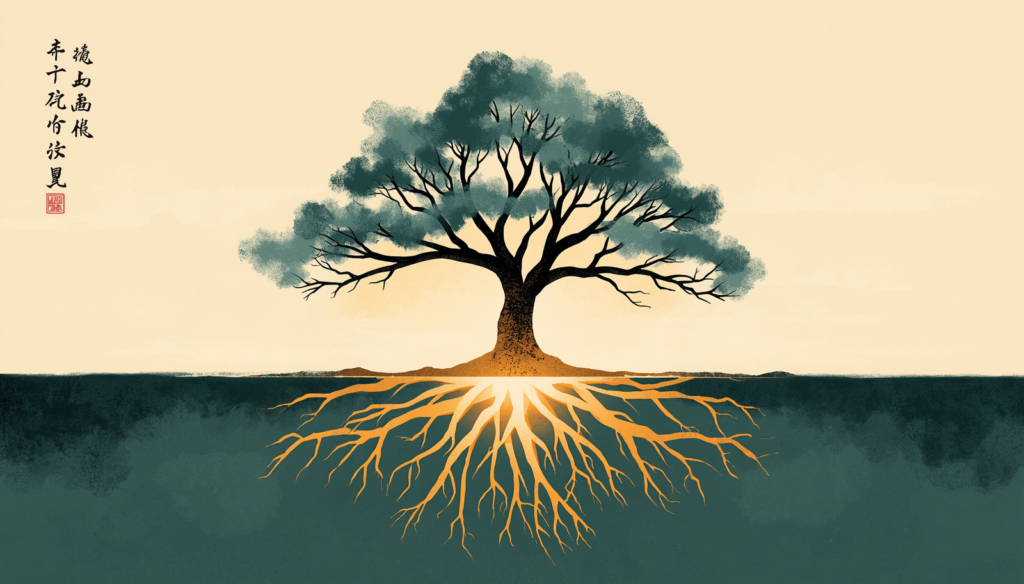
Classical TCM even has a name for this: 标本, Root and Tip. Treat only the loud symptom, and relief is temporary. Treat the Root — the boundary that never got held — and that’s where things actually resolve.

If any part of this series described your own body back to you, that recognition is worth taking seriously. This is exactly the work I do — integrating clinical psychology with a genuine working knowledge of TCM, for people holding two generations together who’ve been running on empty for longer than they’d like to admit.

If that’s you, know you don’t have to keep managing this alone. Simply reach out.

Thank you for following The Sandwiched Body Series – where clinical psychology meets Huangdi Neijing through all ten parts.


The Sandwiched Body Series

You Treat Rest Like a Cost. TCM Treats It Like Capital.

Waiting for a total physical breakdown before you finally change your lifestyle? That isn’t “resilience”—it’s a massive mathematical error.

For Singapore’s “Sandwich Generation,” ignoring minor brain fog, frequent sighing, or back stiffness is simply borrowing energy from your future self at a sky-high interest rate.

2,000 years ago, the Huangdi Neijing (黄帝内经) warned that treating an illness after it forms is like “渴而穿井” (digging a well only when you’re already parched). You are running out of time before a structural foreclosure.

Read part 9 of The Sandwiched Body – where clinical psychology meets Huangdi Neijing to find out how you can audit your load and make the changes in your life.

An asian corporate male is experiencing back pain as he gets up from his office chair.
The Sandwiched Body Series

Is It Just Your Office Chair? The Mind-Body Science Behind Chronic Stiff Backs and Stagnant Stress

Groaning and feeling completely locked up every time you stand up from your desk?

And no, buying a more expensive ergonomic office chair isn’t going to fix it.

For Singapore’s “Sandwich Generation” managing corporate deadlines while physically and emotionally supporting two generations, a stiff lower back is a load-bearing boundary crisis.

2,000 years ago, the Huangdi Neijing (黄帝内经) diagnosed this as “肾之府” (The House of the Kidneys) freezing due to Qi stagnation. Modern medicine calls this unconscious pelvic-lumbar bracing—where stress forces you to subconsciously clench your pelvis, starving your lower back of blood flow.

Read on to learn more about easing that chronic pain from your stiff back.

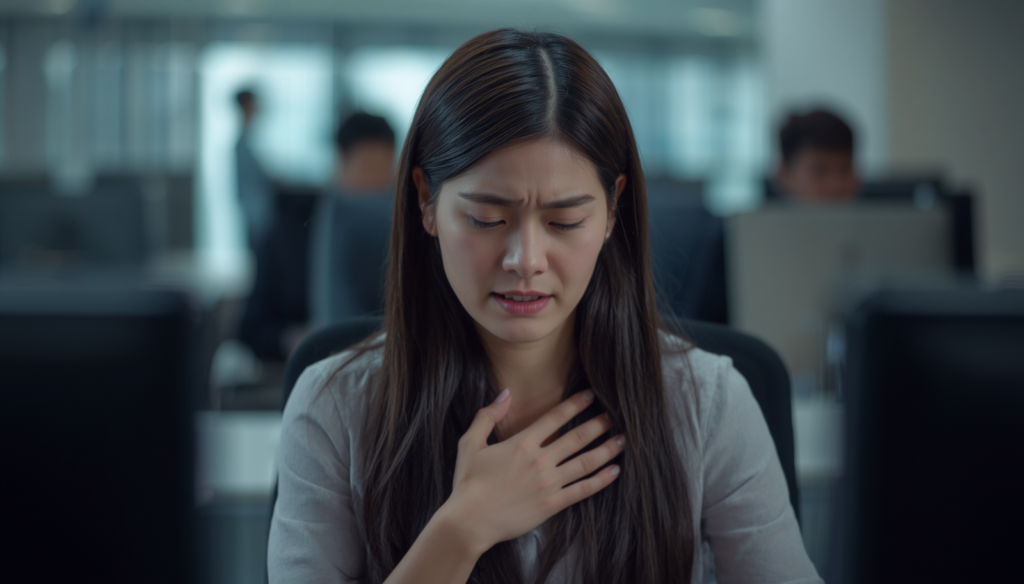
Asian corporate lady experiencing chest-tightness and letting out sighs all day.
The Sandwiched Body Series

“Why Do You Keep Sighing?” The Hidden Link Between Emotional Suffocation and Your Chest Tightness

Letting out heavy, involuntary sighs all day is not just a sign that you’re “bored” or “tired.”

2,000 years ago, the Huangdi Neijing (黄帝内经) diagnosed this as “太息” (Tai Xi — Frequent Sighing), where unvoiced workplace and family frustrations cause your Liver Qi to freeze, creating a physical “suffocation” in your chest. Modern medicine calls this stress-induced diaphragmatic locking, triggering a chronic state of “air hunger.”

Read Part 7 of The Sandwiched Body – where clinical psychology meets Huangdi Neijing to learn more about managing this chest tightness.

An asian sitting on her bed looking fatigued due to adrenal burnout.
The Sandwiched Body Series

The Extinguished Fire — Adrenal Burnout and the Collapse of Kidney Yang

Waking up completely unrefreshed, feeling a bone-deep exhaustion that a long weekend can’t fix?

And no, adding another shot of espresso or hitting the gym isn’t going to turn the engine over.

For Singapore’s “Sandwich Generation” surviving on pure hustle, this total flatline is advanced burnout.

2,000 years ago, the Huangdi Neijing (黄帝内经) diagnosed this as “煎厥” (Jian Jue)—where chronic stress literally boils away your internal Essence (Jing) until your Kidney Yang (metabolic pilot light) collapses. Modern medicine calls this hypocortisolism, where your HPA axis down-regulates to protect your organs from chronic stress.

Read on to find out how to rekindle the flame in you.

The Sandwiched Body Series

The Crushing Grip: Why Unresolved Boundary Stress Triggers Chronic Tension Headaches

Are you experiencing a crushing headache that wraps around your temples like a moving vice?

And no, a painkiller isn’t going to fix the root cause this time.

For Singapore’s “Sandwich Generation” handling endless workplace demands and heavy family logistics, this tension is a physical boundary alarm.

2,000 years ago, the Huangdi Neijing (黄帝内经) diagnosed this as “薄厥” (Bo Jue)—where suppressed corporate frustration forces blood and Qi to explode upward into the head. Modern medicine calls this hyperarousal tension headache, driven by a severe drop in serotonin.

Read on for part 5 of The Sandwiched Body – where clinical psychology meets Huangdi Neijing, to learn more about how to break the “Crushing Grip” using a “Double Heart” recovery approach.

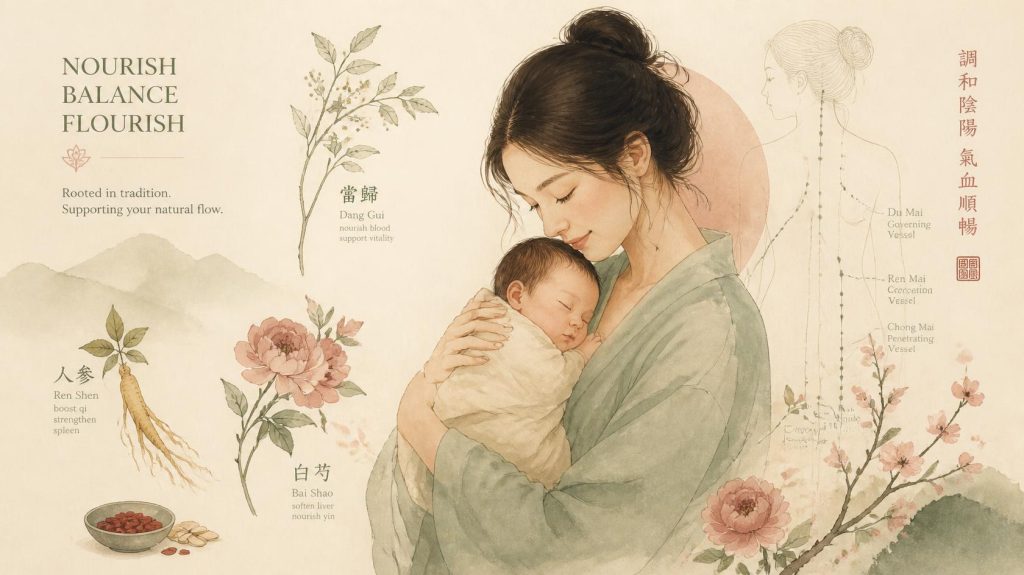
A woman is smiling as she carries her infant in her arms. Around her are TCM herbs that are important in restoring her health post-partum.
Mental Health

When “Baby Blues” Isn’t the Full Story

Postpartum depression affects roughly 1 in 5 to 1 in 10 mothers. It does not resolve on its own and requires active, structure support. From a TCM perspective, the mother’s heart (which houses the Shen or spirit) and her uterus (the blood chamber) has fallen out of sync. When delivery severely depletes Blood and Qi, the spirit has “nowhere to return.” This isn’t only about maternal well-being. Research consistently showed that depression can temporarily reduce a mother’s capacity for the response, attuned interaction infants need to build secure attachment. Read on to find out why early intervention is important and what integrated care can look like.

Asian corporate lady walking out of the office, hand on the stomach, experiencing stomach cramps.
The Sandwiched Body Series

Bloated After a Healthy Meal? Why Corporate Stress Triggers Constant IBS and Acid Reflux

You’ve done everything right. Salad, no dairy, nothing spicy. And thirty minutes after a tense meeting, your stomach is bloated anyway, followed by a familiar burn climbing your throat.

TCM’s explanation: the Liver governs the free flow of Qi and emotion. Swallow enough frustration you don’t get to express, and that flow stagnates. A stagnant Liver forces Qi upward (reflux) or seizing the intestines (IBS-type symptoms).

Psychology’s explanation: your gut runs its own nervous system, in constant contact with your brain via the vagus nerve. Sympathetic activation from an unresolved conflict directly relaxes the lower esophageal sphincter and disrupts intestinal motility — a real, mechanical pathway, not a vague “stress upsets your stomach.”

Read on for the TCM view, the psychological view, and three steps that use both in managing your gut health.

Asian male lying in bed, staring at the ceiling, suffering from insomnia.
The Sandwiched Body Series

“Brain-Dead” at 3 PM, Wide Awake at 3 AM: The Sandwiched Sleep Paradox

Waking up at 3:00 AM with a racing heart and a mind that won’t shut off?
The Huangdi Neijing’s answer: Wei Qi fails to hand off to rest at night, and later TCM pinpoints the early hours around 3am as Liver time — the organ that governs anger. If you’re waking up angry rather than afraid or sad, that’s not a coincidence.

Clinical psychology’s answer: a small, normal pre-dawn cortisol rise triggers a noradrenaline spike in an already-hyperaroused nervous system — and once you’re awake, your mind goes looking for the loudest unresolved thing in your life and starts rehearsing it, which is exactly what keeps you awake.

Read on for Part 3 of The Sandwiched Body Series — the TCM view, the psychological view, side by side, and three steps that use both to help you sleep better.

Scroll to Top