
Insomnia Therapy in Singapore
Sleep is the foundation of mental health. When sleep fails, every other challenge feels magnified. We use the gold-standard CBT-I approach to help you reclaim your nights.
More Than Just "Being Tired"
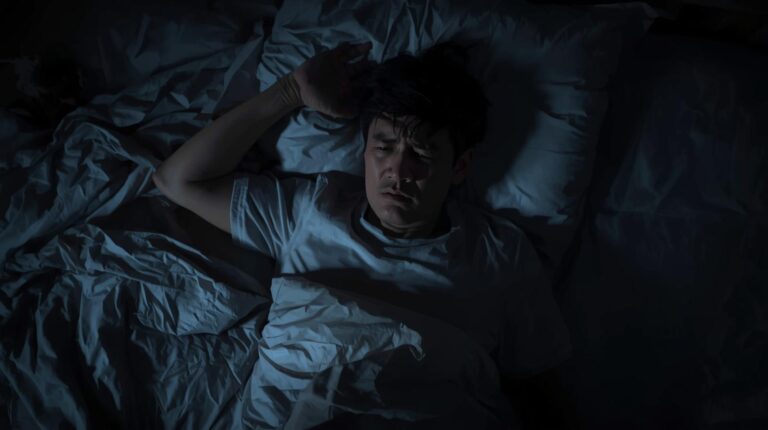
Chronic insomnia is defined by persistent difficulty with sleep quality or quantity, occurring at least 3 nights per week for 3 months or more. It typically manifests in three ways:
Onset Insomnia
Difficulty falling asleep at the start of the night, often due to a "racing mind" or physical restlessness.
Maintenance Insomnia
Waking up in the middle of the night and struggling to return to sleep, often feeling "wired but tired."
Early Awakening
Waking up significantly earlier than desired (often at 3 AM or 4 AM) without feeling refreshed.
Common Triggers & Drivers
Insomnia rarely exists in a vacuum. It is often triggered by a specific event and maintained by the body’s attempt to "fix" the problem. We look at three types of factors:
The Initial Spark (Precipitating)
Acute events that disrupt sleep initially:
- High-stress periods at work or school
- Grief, loss, or relationship conflict
- Medical illness or physical pain
- Major life transitions (new baby, relocation)
The Sleep "Trap" (Perpetuating)
Habits developed to "cope" that actually keep you awake:
- Spending too much time in bed "trying" to sleep
- Irregular napping or sleeping in on weekends
- Monitoring the clock (counting hours left)
- Using alcohol or excessive caffeine to manage energy
The Psychological "Sleep Trap"
A particularly common Perpetuating Factor for working adults in Singapore is the habit of staying up late to reclaim personal time—often referred to as Revenge Bedtime Procrastination.
When your daytime hours are consumed by high-stress work and external obligations, the night becomes the only window for autonomy. By "taking revenge" on the clock through digital entertainment or "doom-scrolling," you inadvertently strengthen the Sleep Trap, training your brain to stay alert when it should be winding down.
Is your evening routine helping you rest, or is it a psychological attempt to reclaim a day that felt out of your control? Reflect on the following questions as you begin your self-assessment:
Self-Check: Your Sleep Impact
Psychologists use the Insomnia Severity Index (ISI) to measure the nature and impact of sleep difficulties. Rate yourself on a scale of 0 (None) to 4 (Very Severe) for the following markers:
- 1. Difficulty falling asleep, staying asleep, or waking too early?
- 2. How dissatisfied are you with your current sleep pattern?
- 3. How much does sleep interfere with your daily functioning (work, social, chores)?
- 4. How noticeable to others are the problems caused by your sleep?
- 5. How worried/distressed are you about your current sleep problem?
Interpreting Your Total Score:
| 0 – 7 | No clinically significant insomnia. |
| 8 – 14 | Subthreshold insomnia (Mild severity). |
| 15 – 21 | Clinical insomnia (Moderate severity). |
| 22 – 28 | Clinical insomnia (Severe severity). |
Source: Bastien, C. H., Vallières, A., & Morin, C. M. (2001). Validation of the Insomnia Severity Index as an outcome measure for insomnia research. Sleep Medicine, 2(4), 297-307.
Disclaimer: This self-check is provided for informational purposes only and does not constitute a clinical diagnosis. A high score suggests that a professional evaluation by a registered psychologist or physician is recommended to explore the underlying causes of your sleep difficulties.
Unsure what your score means for you?
Every individual's experience is unique. We can review these results together during an initial consultation and develop a roadmap specifically for your recovery.
DISCUSS MY RESULTSUnderstanding Your Sleep: A Triple Perspective
01. Western: Hyperarousal
Chronic insomnia is often driven by a state of Physiological Hyperarousal. Even when exhausted, your autonomic nervous system remains in "threat-detection" mode. Over time, the brain develops a conditioned response where the bed itself becomes a trigger for anxiety rather than a sanctuary for rest.
02. TCM: The Heart-Shen
In TCM, sleep occurs when the Shen (Spirit) returns to the Heart to be anchored for the night. Insomnia arises when "Heat" from stress disturbs the Shen, or when a Deficiency of Blood leaves the Spirit with no "anchor" to settle into. This creates a state of "Floating Yang"—a mind that cannot switch off.
03. The Integrative View: How Stress Becomes Chronic
The "Initial Spark" (Liver Qi Stagnation)
Acute stress—like work pressure or life changes—causes the TCM Liver system to become "stagnant." This creates internal heat that rises to the mind, manifesting as the racing thoughts and irritability that keep you from falling asleep.
The "Sleep Trap" (Heart-Blood Deficiency)
As insomnia becomes chronic, the constant "sleep effort" and caffeine use drain your body's resources, leading to Heart-Blood Deficiency. Your sleep becomes light, dream-disturbed, and easily broken, as the Spirit no longer has the strength to stay anchored.

Our Therapeutic Approaches
CBT-I: The First-Line Treatment
International clinical guidelines (including those from the American College of Physicians) recommend Cognitive Behavioral Therapy for Insomnia (CBT-I) as the first-line treatment for chronic insomnia in adults—more effective long-term than sleep medication. At MIND HEALTH, we lead with this evidence-based protocol to break the biological and behavioral cycles of wakefulness.
Learn more about CBT →Integrating MBCT
While CBT-I addresses sleep mechanics, Mindfulness-Based Cognitive Therapy (MBCT) targets the "sleep effort." We teach you to sit with the discomfort of wakefulness without triggering the fight-or-flight response, allowing sleep to return naturally.
TCM-Informed Invitation
For those seeking a holistic perspective, we invite you to explore TCM concepts. We look at how physical depletion (Heart-Blood Deficiency) or stress (Liver Qi Stagnation) may be contributing to your "floating" or restless sleep.
The MIND HEALTH Difference
We don't just provide "sleep hygiene" tips you can find online. We offer clinical behavioral interventions that target the biological and psychological drivers of wakefulness, supported by TCM insights into grounding your nervous system.
Overcoming Chronic Sleep Deprivation
The following is a composite case study representing common experiences of our clients.*
The Challenge
"Mr. J," age 35, struggled with a persistent cycle of morning fatigue and poor daytime concentration. Despite working long hours and experiencing mild "tension" headaches and cognitive slowing, he found it impossible to sleep early. When he finally had time to rest, he would "doom scroll" on his phone as a way to reclaim personal time. Before he knew it, it would be 2:00 AM. He would force himself to sleep, only to wake up feeling exhausted and unprepared for the demands of the next day.
The Intervention
Our approach focused on Cognitive Behavioral Therapy for Insomnia (CBT-I) to break the link between the bed and digital stimulation. We addressed the "Revenge Bedtime Procrastination" by identifying his underlying need for autonomy after high-pressure workdays. We integrated Stimulus Control and Sleep Restriction techniques to reset his biological clock, alongside mindfulness exercises to help him transition into a relaxed state without the need for digital distractions.
The Transformation
By replacing digital "scrolling" with structured relaxation, Mr. J was able to shift his sleep window and improve his sleep efficiency. He no longer felt the "cognitive fog" or the morning headaches that had compromised his professional performance. He regained his mental clarity and found that he could enjoy his downtime without sacrificing his physical health. He felt empowered by a sustainable sleep routine that allowed him to wake up refreshed and focused.

Frequently Asked Questions (FAQs)
How is this different from basic "Sleep Hygiene"? +
My mind starts racing the moment I hit the pillow. Can therapy help? +
I am currently on sleeping pills. Can I still start CBT-I? +
How do TCM perspectives inform your sleep treatment? +
Will I need a medical referral to start sleep therapy? +
How many sessions will I typically need? +
Can I still drink coffee while undergoing treatment? +
Reclaim Your Restful Nights
Ready to break the cycle of sleep procrastination and morning fatigue? Book an initial session to understand your unique sleep drivers and start your journey toward restorative rest.